
Blog
2 Wheel vs 4 Wheel Luggage: Which Is Better for Indian Roads?
Mar
When you’re standing in a luggage store or scrolling online, one of the first questions that comes up is simple but important:
Should you choose 2 wheel luggage or 4 wheel luggage?
The debate of 2-wheel vs 4-wheel luggage is common among travelers today. At first glance, spinner luggage looks sleek. In advertisements you see it gliding effortlessly across shiny airport floors.
But if you’ve ever dragged a suitcase across a cracked railway platform in Delhi, or tried to roll one down a gravel lane in Pune, you know the reality is very different.
Travel in India isn’t just about airports — it’s about uneven sidewalks, potholes, crowded train stations, auto stands, and streets that constantly test the durability of your gear.
And in those conditions, the type of wheels on your luggage can make or break your journey.
My Experience: Airport vs Real Streets
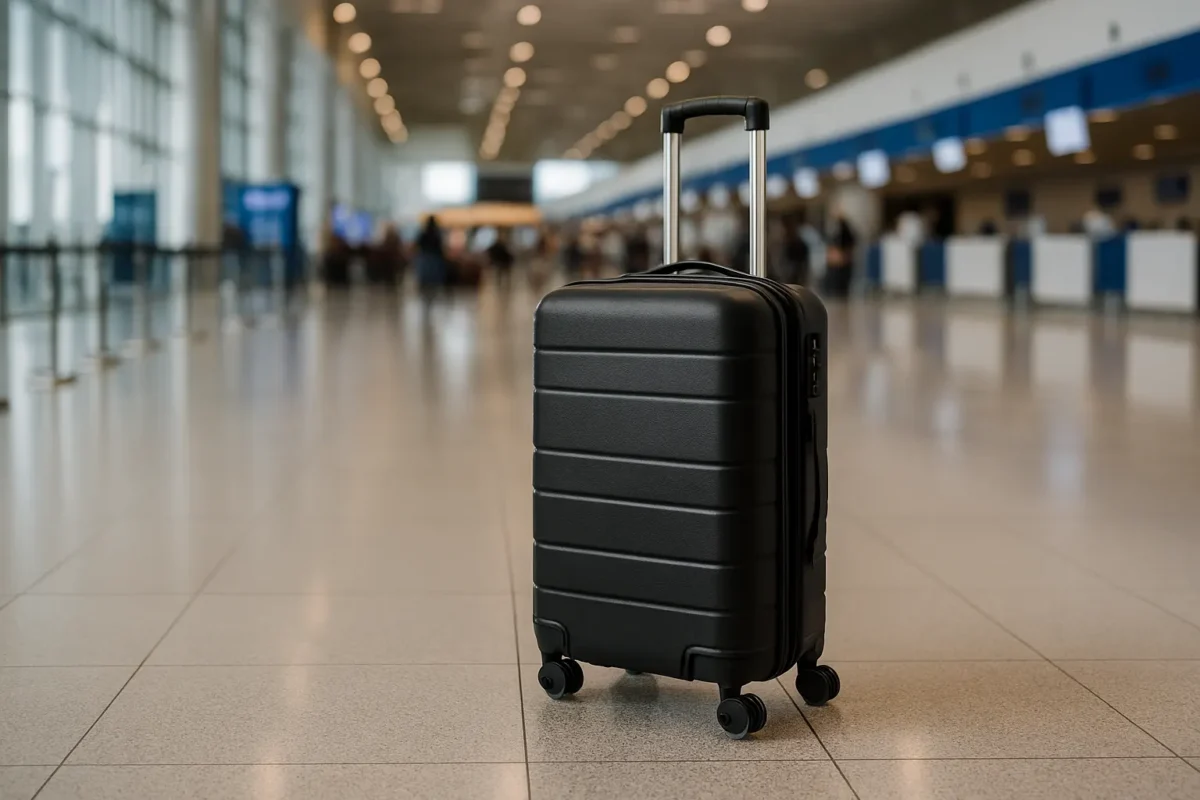
I still remember pulling my 4-wheel spinner bag through Mumbai airport — it felt like magic. Smooth, silent, effortless.
But the moment I stepped outside, things changed.
The wheels rattled on broken pavement, got stuck on curbs, and by the time I reached the taxi stand, one of the wheels had already chipped.
Contrast that with my old 2-wheel luggage bag. It wasn’t as flashy, but it rolled steadily over gravel roads in Nagpur and survived countless train journeys without a single wheel replacement.
That’s when I realized something important:
The choice between 2-wheel vs 4-wheel luggage isn’t about style — it’s about durability in real travel conditions.
What Is Better for Indian Travel?
For most travel conditions in India, 2-wheel luggage is the more practical choice.
Here’s why many experienced travelers prefer it:
Durability
Larger recessed wheels absorb impact better and are less likely to break.
Control
It’s easier to pull a tilted bag over bumps, slopes, and uneven terrain.
Longevity
Two-wheel systems usually last longer because they experience less sideways stress compared to spinner wheels.
Meanwhile, 4-wheel luggage works beautifully in airports and hotels, where floors are smooth and distances are short.
But once you step outside those environments, the advantages start to disappear.
Why Spinner Luggage Dominates Airports
Four-wheel luggage, commonly called spinner luggage, was designed specifically for smooth indoor environments like:
- airports
- hotels
- malls
- conference halls
Its main advantage is 360-degree maneuverability.
You can push the suitcase beside you instead of pulling it, which makes it easier to navigate crowded check-in lines or narrow airplane aisles.
Another benefit is weight distribution. Because the bag sits on four wheels, you don’t carry much of the weight on your arm.
But this design depends heavily on one condition:
The surface must be smooth.
Once spinner luggage encounters cracked sidewalks, gravel, or potholes, those small external wheels begin to vibrate, jam, or sometimes even break.
2-Wheel Luggage: Built for Rough Roads
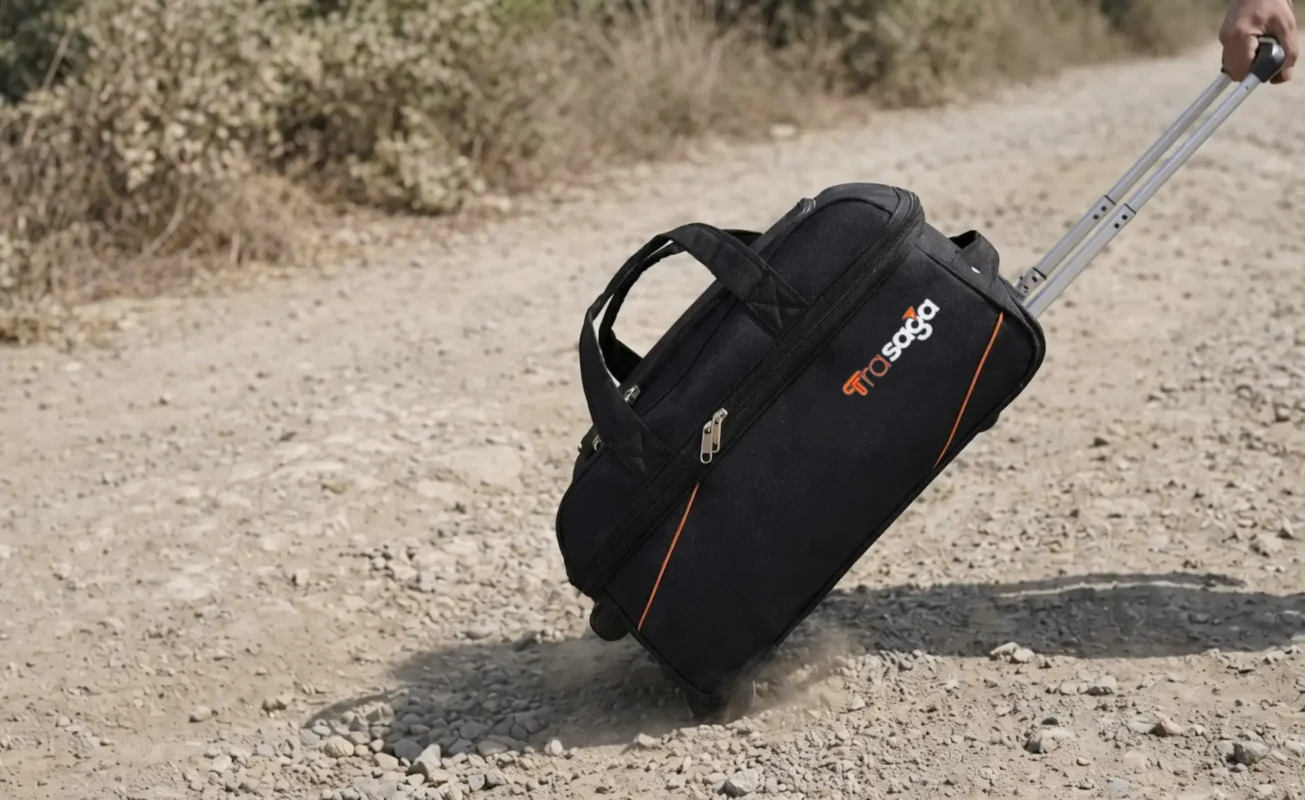
Two-wheel luggage follows a different design philosophy.
Instead of sitting upright on four wheels, the suitcase is tilted and pulled behind you.
This simple change provides several practical advantages.
Larger Inline Wheels
Two-wheel luggage usually uses larger inline wheels, similar to rollerblade wheels.
These wheels can easily roll over:
- pavement cracks
- gravel paths
- uneven railway platforms
- rough sidewalks
Where a small spinner wheel might stop suddenly, a larger inline wheel keeps moving.
Recessed Wheel Protection
Another advantage is that most 2-wheel luggage wheels are recessed into the frame.
This protects them from:
- curb impacts
- rough baggage handling
- accidental side hits
Spinner luggage wheels, on the other hand, stick out from the base and are much more exposed.
Better Control on Uneven Terrain
When pulling a two-wheel bag, the handle acts as a lever.
This gives you better control when navigating slopes, bumps, and crowded train platforms.
Instead of balancing the suitcase on small wheels, you’re actively pulling it through the terrain, which makes movement more stable.
Quick Comparison: 2-Wheel vs 4-Wheel Luggage
| Feature | 2-Wheel Luggage | 4-Wheel Spinner Luggage |
|---|---|---|
| Terrain | Works well on rough roads | Best on smooth floors |
| Wheel Size | Larger inline wheels | Small spinner wheels |
| Durability | Very durable | More prone to wheel damage |
| Control | Easier on slopes and bumps | Harder on uneven surfaces |
| Airport Movement | Moderate | Excellent |
| Best For | Real-world travel | Airports & hotels |
The “Tilt Trap” Problem
If you observe travelers outside many Indian airports, you’ll often see them tilting their spinner luggage and dragging it on two wheels.
This happens because rough surfaces make it difficult to roll a spinner bag on all four wheels.
But this creates a serious problem.
Spinner luggage wheels are not engineered to carry weight at an angle.
When tilted, the entire load of the suitcase is concentrated on two small wheels that were designed for vertical support.
Over time, this can lead to:
- Bent wheel axles
- Uneven wheel wear
- Cracked wheel mounts
This is one of the most common reasons travelers end up replacing luggage earlier than expected.
When Should You Choose 2-Wheel Luggage?
A 2-wheel luggage bag is usually the better option if you:
- walk on uneven sidewalks or roads
- travel frequently by train
- carry heavier luggage
- travel through busy urban areas
- want luggage that lasts longer
For many Indian travelers, these situations are quite common.
When 4-Wheel Luggage Still Makes Sense
Four-wheel spinner luggage still has advantages in certain situations.
It may be a better choice if you:
- mostly travel through airports
- stay in hotels with smooth floors
- carry lightweight luggage
- value easy maneuverability indoors
If your travel environment is mostly controlled and smooth, spinner luggage can feel very convenient.
Why Trasaga Built the Odessy Duffle for Real Travel
After seeing countless spinner luggage wheels fail on rough roads, we designed the Trasaga Odessy Duffle specifically for real travel conditions.
Instead of fragile spinner wheels, the Odessy Duffle uses oversized recessed wheels built into a reinforced frame.
This design allows it to handle:
- cracked sidewalks
- railway platforms
- gravel paths
- crowded urban streets
The protected wheel system reduces the risk of damage from impacts and rough handling — something spinner luggage often struggles with.
In simple terms, it’s travel gear built for the journey itself, not just the airport terminal.
Conclusion: Choose for the Journey, Not the Terminal
When comparing 2-wheel vs 4-wheel luggage, the right choice depends on where you travel most.
Spinner luggage feels smooth and convenient in airports and hotels.
But real travel often involves rough roads, uneven sidewalks, and crowded stations.
For those environments, 2-wheel luggage offers better durability, control, and long-term reliability.
For many travelers — especially in India — a well-built two-wheel bag remains the most practical companion.
FAQs
Is 2-wheel luggage more durable than 4-wheel luggage?
Yes. Two-wheel luggage usually has larger recessed wheels that are better protected, making them more durable on rough terrain.
Why do spinner luggage wheels break easily?
Spinner wheels are small and externally mounted. When pulled on uneven surfaces, they experience sideways stress that can damage the wheel housing or axle.
Is 4-wheel luggage good for Indian travel?
Four-wheel luggage works well inside airports and hotels, but it may struggle on uneven roads, railway platforms, and rough sidewalks commonly found in many cities.
What type of luggage is best for rough roads?
Two-wheel luggage with large inline wheels is generally the best option for rough terrain and long pulling distances.
If you’re choosing luggage for tough travel conditions, you might also want to read our guide on best travel bags for Indian roads.
